

British Values an Protected Characteristics
British Values
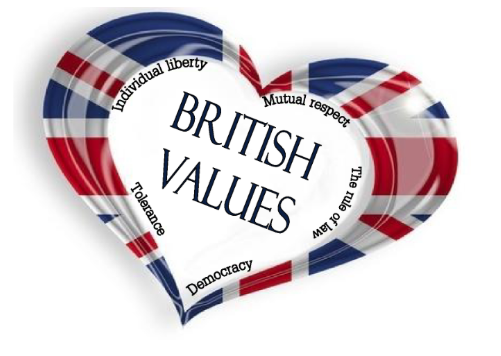
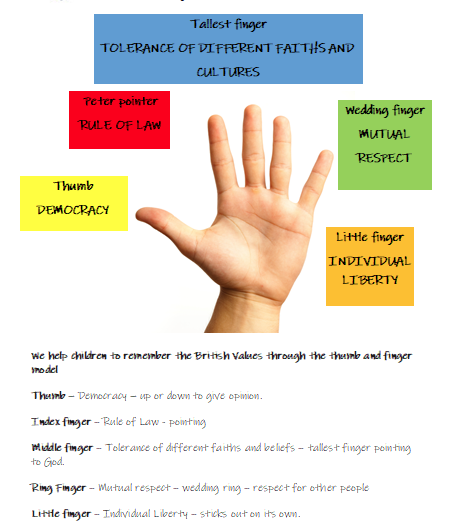
At Tibberton School and Early Years we actively promote the fundamental British values of democracy, the rule of law, individual liberty, and mutual respect and tolerance of those with different faiths and beliefs.
We aim to:
- Teach children to be proud to live in Britain
- Ensure children are not being radicalised at an early age.
- Ensure children are safe and healthy.
- Give children copious opportunities to explore other cultures in ways they understand at such a young age. For example, cooking, songs and celebrations.
- Encourage children to be the best they can possibly be.
Democracy
Democracy is part of our working practice at the school. Pupils are always listened to by adults, and are taught to listen carefully and with concern to each other - respecting the right of every individual to have their opinions and voices heard. Pupils have their own voice, and are able to air their opinions and ideas through our School Council, elections for House Captain and various other committees. The election of the School Council members is based on pupil votes, demonstrating democracy in action. Voting is also an element of a range of day-to-day activities such as School Council meetings.
Individual Liberty
Within school, pupils are actively encouraged to make choices on a daily basis, knowing that they are in a safe and supportive environment. Our pupils are encouraged to know, understand and exercise their rights and personal freedoms and are advised how to use these safely; examples of this can be clearly seen in our PSHCE lessons, and safe internet use procedures. Whether it is through choice of challenge in maths, or how they work in groups and record their work or their choice to participate in one or more of our numerous extra-curricular activities, our pupils are given the freedom to make choices.
Mutual Respect
Respect is one of the values that drive our ethos. We emphasise the right and responsibility of every child to learn. We ensure that children understand that they need to consider their actions carefully so that they do not detract from learning and therefore affect the rights of others to learn.
The Rule of Law
The importance of laws, whether they are those that govern the class, the school or the country, are consistently reinforced. Our core values are reflected in children’s routines every day. Each class follows school rights and responsibilities that reflect our core values. Our values-based behaviour policy, as well as promoting good behaviour and effort, also makes it clear that if rules are broken there are consequences. Children take part in reflecting and identifying how to make amends. Our children are also taught that there are laws to protect us, and when these laws are broken we are potentially putting ourselves in danger, and could find ourselves in trouble.
Tolerance of Those with Different Faiths and Beliefs
At Tibberton we develop pupils’ understanding of different faiths and beliefs through religious education studies, PSHCE, assemblies and our wider curriculum. This is further enhanced through carefully planned educational visits and by welcoming parents and visitors from outside the school. Thus our pupils gain an enhanced understanding of their place in a culturally diverse society. Despite the lack of cultural diversity in the school and in our local community, we make every effort to highlight important events such as Chinese New Year, Eid and Diwali as well as the major Christian festivals – Christmas and Easter so that children understand the important of tolerating the faiths of others.
As a whole school community of pupils, staff and governors, Tibberton Community Primary School aims to uphold these values in our daily interactions and work with one another to ensure that our pupils leave our school able to take their place within modern Britain today.
| Name | Format | ||
|---|---|---|---|
| Files | |||
| British Values Policy March 2025.pdf | |||
Protected Characteristics
Protected Characteristics
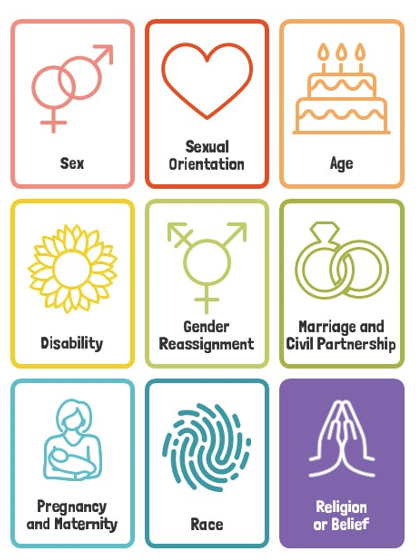
As a school we understand the importance of preparing our children for life in modern Britain and part of this is helping children to respect and celebrate diversity within our school community and more widely. Part of the work we do is talk to the children about the Equality Act and UN Rights of a Child. We do this throughout our curriculum and using Picture News to explore and discussed. The protected characteristics include:
- Gender
- Sexual Orientation
- Age
- Disability
- Gender Reassignment
- Marriage and Civil Partnership
- Pregnancy and Maternity
- Race
- Religion or Belief
What is the UN Convention?
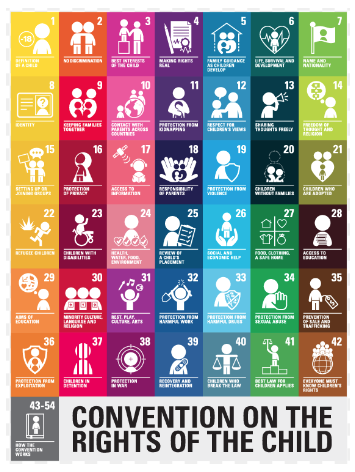
The UN Convention on the Rights of the Child (UNCRC) is the most complete statement of children’s rights ever produced and is the most widely-ratified international human rights treaty in history.
What makes the UN Convention so special?
The Convention has 54 articles that cover all aspects of a child’s life and set out the civil, political, economic, social and cultural rights that all children everywhere are entitled to. It also explains how adults and governments must work together to make sure all children can enjoy all their rights.
Every child has rights “without discrimination of any kind, irrespective of the child’s or his or her parent’s or legal guardian’s race, colour, sex, language, religion, political or other opinion, national, ethnic or social origin, property, disability, birth or other status” (Article 2).
The Convention must be seen as a whole: all the rights are linked and no right is more important than another. The right to relax and play (Article 31) and the right to freedom of expression (Article 13) have equal importance as the right to be safe from violence (Article 19) and the right to education (Article 28).
We are the only organisation working for children recognised by the Convention.
The Convention is also the most widely ratified human rights treaty in the world. All UN member states except for the United States have ratified the Convention. The Convention came into force in the UK in 1992.
As part of our Personal, Social and Health Education curriculum (PSHE), all classes work on valuing difference. We explore these themes in PSHE lessons, assemblies and through Picture News. During assemblies, we also look at books on respecting, accepting and celebrating diversity and our own uniqueness.


